 Search Artists
 Search Disciplines
 Search
Places
Search
Places
Image


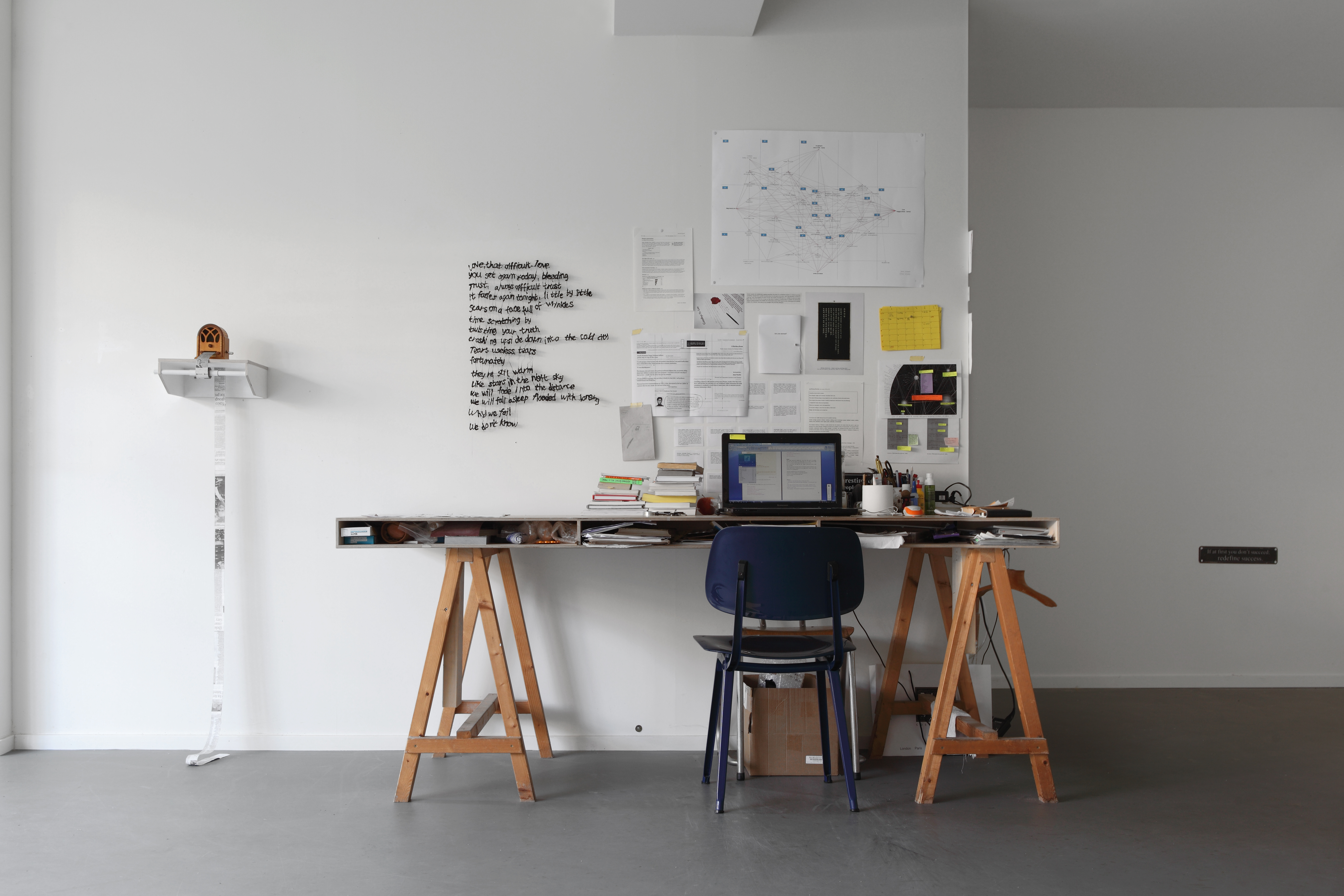


The Jan van Eyck Academie is a post-academic institute open to a wide array of disciplines and approaches, ranging from material-based to research-driven practices, addressing both urgent global issues and more personal inquiries.
The academy provides international artists, designers, curators, architects, writers, and other makers and researchers with the time and space needed to further develop, materialize, and disseminate their projects. With the expert support of the academy advisers, the curator/resident liaison, the departments of Nature Research and Education & Development, as well as the library and the labs – Photography & Audiovisual, Material Matters, Food, Printing & Publishing, and Future Materials, each selected participant can not only work in their individual trajectories but also develop themselves in relation to their peers.
The selected artists have in common an inquisitive, open and engaged attitude, their work testifies to an art practice that is investigative and committed. Participants can get actively involved in institutional (public) programmes where speculative concepts are tested and the pressing socio-environmental challenges of today are debated.
Public presentations, participation in Open Studios, broadening of the network and possibility for collaborations.
Each selected participant is guaranteed to receive private accommodation – a furnished studio apartment – which the participant is required to accept. Service costs are included in the monthly rental fee which is deducted from the participant’s stipend every month for the duration of the residency period. Depending on personal circumstances, a participant is most likely eligible to receive a rental subsidy.
A private studio and access to all academy facilities (labs, departments, gardens, communal spaces), and network.
The Jan van Eyck Academie is situated in the historical city centre of Maastricht, the Netherlands, at the heart of the Euregion, occupying a monumental modernist building designed by architect Frits Peutz.